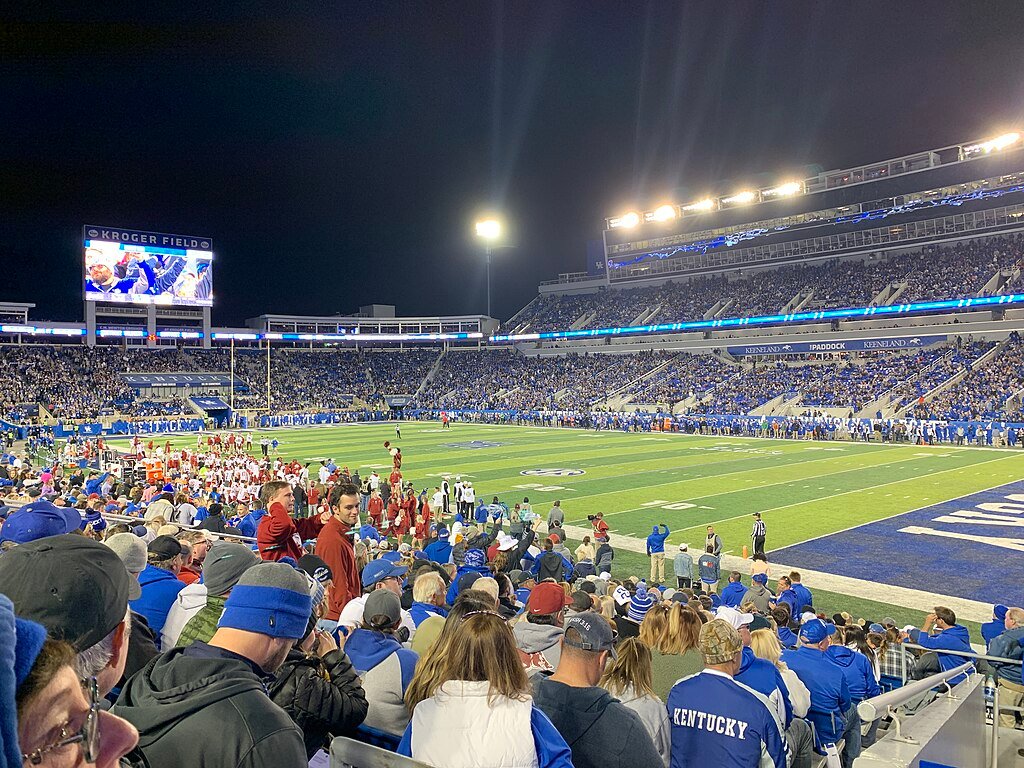
PCN02WPS, CC BY-SA 4.0 , via Wikimedia Commons
Right now, the area around Kroger Field is a ghost town for about 350 days a year. On game days, it’s the center of the universe. But once the final whistle blows and the tailgates pack up, the energy simply vanishes into the Lexington air.
The University of Kentucky wants to fix that. They aren’t just looking for a new scoreboard or better seats. They’re planning an entire entertainment district that would turn the stadium’s surroundings into a year-round destination for fans, students, and locals alike.
More than just a place for football
The vision for the Kroger Field Entertainment District is pretty ambitious. Instead of empty asphalt and practice fields, the school wants to see a hub of activity. Think of it as a neighborhood designed specifically for the Big Blue Nation.
While the specifics are still being ironed out, the core ideas are clear. Here’s what is likely on the table:
- A high-end hotel for visiting fans and alumni
- Local and national restaurant chains
- Retail shops selling everything from gear to groceries
- New housing options to keep the area populated
It’s a move we’re seeing all over the country. Schools realize that they’re sitting on valuable real estate that shouldn’t sit idle between seasons.
Turning Saturdays into a full-time economy
This isn’t just about making game day better. It’s a massive business move. By creating a permanent district, the university can generate revenue every day of the week. And it makes the campus a lot more attractive to people who aren’t even sports fans.
But there are hurdles. Parking is the big one. Fans are fiercely protective of their tailgate spots, and any construction that eats into that space is going to be a tough sell. The university will have to balance the need for new buildings with the traditions that make Lexington special.
What comes next?
We’re still in the early stages of this transformation. The university has been looking for developers to help foot the bill and bring the expertise needed for a project this size. It’s a long-term play that will likely take years to fully realize.
Soon, the walk to the stadium might not just be a march through a parking lot. It could be a stroll past coffee shops and boutiques. For a city that lives and breathes Kentucky football, it’s a shift that could change the vibe of the South Side forever.